

Is Your Air Conditioner Leaking Water?
Finding water dripping from your air conditioner can be alarming, particularly when it begins running down a wall, staining the ceiling or pooling near electrical equipment. Although a small amount of condensation is a normal part of air-conditioner operation, water leaking inside your home is not something you should ignore.
An air conditioner leaking water usually points to a drainage, airflow or installation problem. Common causes include a blocked condensate drain, dirty filters, a frozen evaporator coil, a damaged drain tray or an incorrectly installed unit. Some problems are relatively simple to address, while others require diagnosis and repair by a qualified air conditioning technician.
This guide explains why air conditioners produce water, the most likely causes of an indoor leak and what you should do when you notice one.
Quick Answer: Why Is Water Dripping From My Air Conditioner?
The most common reasons an air conditioner leaks water are:
- A blocked condensate drain
- Dirty or clogged air filters
- A frozen evaporator coil
- A damaged or rusted drain tray
- A faulty condensate pump
- Poorly insulated refrigerant pipework
- Incorrect installation or drainage
- High humidity combined with an underlying drainage problem
Turn the system off if water is leaking indoors, especially if it is close to a power point, light fitting or electrical component. Clean up accessible water and arrange an inspection if you cannot identify a simple, safe cause.
Why Do Air Conditioners Produce Water?
Air conditioners do not only cool the air. They also remove moisture from it.
Warm indoor air is drawn through the system and passed over a cold evaporator coil. As the air cools, water vapour condenses on the coil in much the same way that moisture forms on the outside of a cold drink.
This condensation should fall into a drain tray and leave the building through a condensate pipe. Depending on the installation, the water may drain by gravity or be removed by a small condensate pump.
It is therefore normal to see water dripping from the designated drain outside while the air conditioner is operating. It is not normal for water to:
- Drip from the indoor unit
- Run down an internal wall
- Leak through the ceiling
- Pool beneath the air conditioner
- Come through an air vent
- Create damp smells or water stains indoors
If water is appearing inside, the condensation is not draining as intended or excessive moisture is forming somewhere it should not.
1. The Condensate Drain Is Blocked
A blocked condensate drain is one of the most common causes of an air conditioner leaking water.
Over time, the drain line can accumulate dust, dirt, mould, algae and other debris. Insects may also enter an exposed outdoor drain opening. Once the pipe becomes restricted, water backs up into the drain tray and eventually overflows from the indoor unit.
Possible signs of a blocked drain include:
- Water dripping from the bottom of a split-system head
- A full or overflowing drain tray
- Musty or damp smells when the unit runs
- Water stains around the indoor unit
- Little or no water leaving the outdoor drain
- Gurgling sounds near the drain line
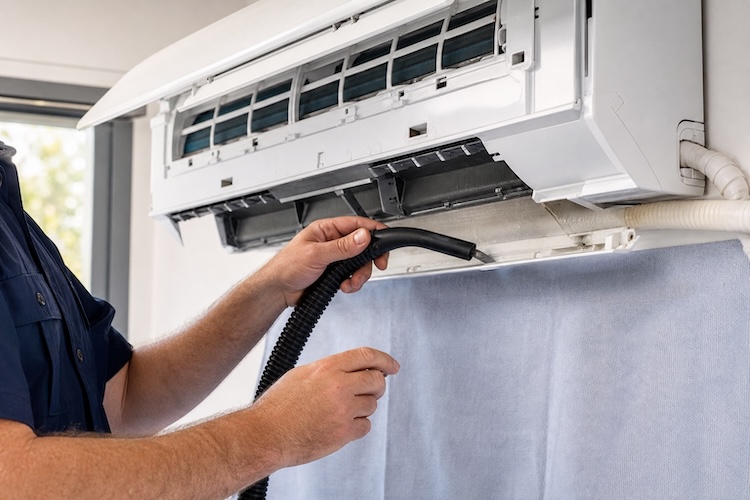
A technician can inspect and clear the complete drainage system without damaging the pipe or pushing a blockage farther into it. The tray and drain should also be cleaned to remove the material that caused the obstruction.
Avoid forcing wire or sharp objects into the drain. This can puncture flexible pipework, damage internal components or turn a straightforward blockage into a more expensive repair.
2. The Air Filters Are Dirty
Dirty filters may not appear directly connected to a water leak, but they can create the conditions that cause one.
When a filter becomes clogged with dust, the air conditioner cannot move enough warm air across the evaporator coil. The coil may then become excessively cold and begin to freeze. Once the ice melts, the volume of water can overwhelm the drain tray or escape from areas not designed to handle it.
Other signs of a dirty filter include:
- Weak airflow
- Reduced cooling performance
- Longer operating cycles
- Higher energy use
- Dust around the indoor unit
- Ice forming inside the air conditioner
- Unusual or musty odours
Homeowners can usually remove and clean reusable split-system filters by following the manufacturer’s instructions. Turn the unit off first, allow the filters to dry completely and reinstall them correctly.
However, cleaning the filter will not necessarily resolve a leak that has already developed. The coil, drain tray and condensate pipe may also require professional cleaning.
Regular air conditioner maintenance helps keep filters, coils and drains clean while identifying developing faults before they cause water damage or a breakdown.
3. The Evaporator Coil Has Frozen
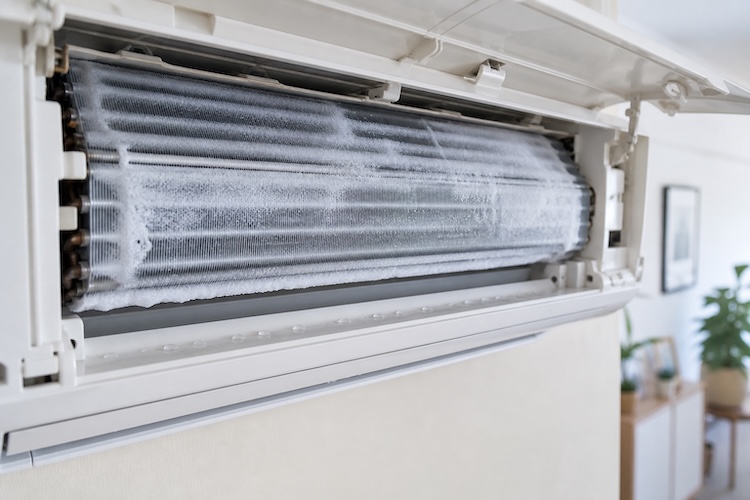
A frozen evaporator coil can produce a significant amount of water when the ice begins to thaw.
Low airflow is a common cause, but it is not the only possibility. The coil may freeze because of:
- Dirty filters
- A dirty evaporator coil
- Blocked or closed vents
- A faulty indoor fan
- Incorrect system settings
- A refrigerant leak or incorrect refrigerant charge
- A malfunctioning sensor or control
You may notice ice on the indoor coil or connected pipework, weak airflow, poor cooling, water dripping after the unit is turned off or a hissing sound.
If you see ice, turn the system off and allow it to thaw naturally. Do not chip or scrape the ice away because the evaporator coil and fins can be easily damaged. Place towels or a suitable container beneath the unit if it is safe to do so.
Do not repeatedly restart the air conditioner after it freezes. The underlying fault still needs to be found, and continued operation may place additional strain on the compressor.
Refrigerant faults must be assessed by an appropriately licensed technician. Simply adding more refrigerant is not a proper solution if the system has a leak.
4. The Drain Tray Is Cracked, Rusted or Dislodged
The drain tray sits beneath the evaporator coil and collects condensation before directing it into the drain.
Age, corrosion, accidental damage or previous servicing work can cause the tray to crack or move out of position. Water may then escape before it reaches the condensate pipe.
This problem is more common in older systems, but a newer unit can also develop tray damage. A technician will need to inspect the tray, determine whether it can be repaired and check whether replacement parts are available.
A damaged tray should not be covered with a temporary sealant without first identifying why it failed. An overflowing tray caused by a blocked drain can resemble a cracked tray, so an accurate diagnosis matters.
5. The Condensate Pump Has Failed
Some air conditioners cannot rely on gravity to remove condensation. These installations use a pump to move water to a suitable discharge point.
If the condensate pump fails, becomes blocked or loses power, water can accumulate until it overflows. A malfunctioning float switch can cause a similar issue.
Signs of a pump problem may include:
- Water leaking from a ceiling-mounted or concealed unit
- An unusual buzzing or rattling sound
- A pump that runs continuously
- Water collecting in the pump reservoir
- The air conditioner stopping unexpectedly
- Intermittent leaking
Condensate pumps contain electrical and mechanical components and should be inspected by a technician. The technician can check the pump, reservoir, float switch, power supply and discharge line to find the actual cause.
6. The Air Conditioner Was Installed Incorrectly
Correct installation is essential for reliable drainage. Even a new air conditioner can leak if the indoor unit, drain tray or condensate pipe has not been positioned properly.
Installation-related causes can include:
- An indoor unit that is not level
- A drain pipe with insufficient fall
- A sag or low point in the drain line
- Incorrect pipe connections
- A pinched or crushed drain hose
- Poor condensate pump positioning
- Gaps that allow humid outdoor air to enter
- Incorrectly insulated refrigerant pipes
A gravity drain needs a suitable downward path so water can flow away freely. If the pipe rises, sags or becomes compressed, condensation may remain in the system and eventually overflow.
Installation faults often become noticeable soon after a new unit is fitted, but some take longer to appear as dirt gradually accumulates in a poorly configured drain.
7. Refrigerant Pipes Are Not Properly Insulated
Cold refrigerant pipes can attract condensation when they come into contact with warm, humid air. These pipes should be covered with suitable, intact insulation.
If the insulation is missing, damaged, separated or deteriorating, moisture may form on the pipe and drip into the ceiling, wall cavity or room. This can look like a blocked drain even though the condensation is occurring outside the intended drainage system.
A technician can inspect the pipework and replace damaged insulation. This is especially important when the leak is hidden in a ceiling because ongoing moisture can affect plaster, insulation and nearby building materials.
8. Perth’s Humidity Is Increasing Condensation
An air conditioner will remove more moisture on humid days. Greater condensation is normal, but a correctly operating system should still drain that water safely.
Humidity alone does not usually explain water pouring from an indoor unit. Instead, it often exposes an existing problem such as:
- A partially blocked drain
- A dirty coil
- Poor pipe insulation
- An undersized drain
- Incorrect system installation
- A struggling condensate pump
If leaking only occurs during humid weather or after the system has been running for several hours, the drainage system may be operating close to its limit and should be checked.
Why Is My Split-System Air Conditioner Leaking Water?
When a wall-mounted split system leaks, the most likely causes are a blocked drain, dirty filters, a frozen coil or incorrect installation.
Water commonly appears along the bottom of the indoor unit and runs down the wall. In some cases, it may drip from one side because the unit is not level or the tray is overflowing unevenly.
Switch the system off and inspect the filters if they are designed to be removed by the user. Do not remove the unit’s casing or try to access internal electrical components.
A technician can clean the evaporator coil and drain tray, clear the condensate line, inspect the fan and confirm that the unit has been mounted and drained correctly.
Why Is Water Leaking From a Ducted Air Conditioner?
A ducted system may leak through a ceiling vent, around the return-air grille or near the concealed indoor unit.
Possible causes include:
- A blocked condensate drain
- An overflowing safety tray
- A failed condensate pump
- A frozen indoor coil
- Damaged drain pipework
- Poorly insulated ducts or refrigerant pipes
- Condensation forming around vents
- Air leaks into the ceiling system
Because ducted equipment is usually installed in the roof space, leaks may remain hidden until a ceiling stain appears. Water can travel along ducts, pipes or framing before becoming visible, meaning the wet area may not be directly beneath the fault.
Turn the system off and arrange an inspection promptly. Continuing to run a leaking ducted unit can increase the risk of ceiling and insulation damage.
Can I Use an Air Conditioner That Is Leaking Water?
It is best to turn off an air conditioner that is leaking indoors until the cause is identified.
Continuing to use it may:
- Damage walls, ceilings, flooring or furniture
- Encourage mould and unpleasant odours
- Affect nearby electrical components
- Worsen an existing drainage blockage
- Place strain on a system with a frozen coil
- Make the eventual repair more expensive
A small amount of water coming from the designated outdoor drain is generally normal. Water dripping from the indoor unit or entering the building is not.
If water is close to electrical equipment, do not touch the unit or surrounding wet area. Isolate power only if you can do so safely and contact a professional.
What Should I Do If My Air Conditioner Is Leaking?
Take the following steps:
- Turn the air conditioner off. This stops the system from producing more condensation and may prevent further water damage.
- Protect the surrounding area. Move furniture and belongings away, then use towels or a container to collect accessible water.
- Check the filters. If the manufacturer permits user removal, inspect them for heavy dust and clean them according to the instructions.
- Look for visible ice. Ice suggests an airflow, fan or refrigerant problem. Allow it to thaw naturally.
- Check the outdoor drain opening. Look for an obvious obstruction, but do not insert tools or chemicals into the pipe.
- Photograph the leak. Water may stop once the unit is switched off. Photos can help the technician understand where it appeared.
- Arrange professional diagnosis. Persistent, heavy or concealed leaks should be assessed before the unit is used again.
When Should You Call an Air Conditioning Technician?
Book an inspection if:
- Water continues to leak after the filters are cleaned
- The drain repeatedly blocks
- Ice is forming on the coil or pipework
- The air conditioner is not cooling properly
- The unit makes unusual noises
- Water is coming through the ceiling
- The system trips the circuit breaker
- You suspect a refrigerant problem
- The air conditioner was recently installed
- The leak has caused stains, dampness or a musty smell
A professional technician can distinguish between a straightforward drainage blockage and a more serious airflow, refrigerant, pump or installation fault.
Hurricane Air provides professional air conditioner repairs in Perth for split systems, ducted units and commercial air conditioning equipment.
How Can You Prevent Your Air Conditioner From Leaking?
The most effective preventive steps are:
- Clean reusable filters regularly
- Keep indoor and outdoor vents unobstructed
- Do not ignore weak airflow or reduced cooling
- Watch for ice, damp smells and water stains
- Keep the outdoor condensate outlet clear
- Arrange regular professional servicing
- Have recurring drain blockages properly investigated
- Ensure new systems are correctly sized and installed
During professional maintenance, a technician can clean the filters, coils, drain tray and condensate line while checking airflow, refrigerant performance, electrical components and drainage.
Most residential systems benefit from servicing at least once a year. Systems that operate for long periods, are exposed to substantial dust or serve commercial premises may require more frequent attention.
Get a Leaking Air Conditioner Checked in Perth
An air conditioner leaking water may only need a blocked drain cleared, but it can also indicate a frozen coil, damaged tray, failed pump or installation problem. Acting early can help prevent damage to your wall, ceiling, flooring and air conditioning system.
Hurricane Air’s qualified technicians diagnose and repair leaking split systems, ducted air conditioners and commercial units across Perth. The team focuses on finding the underlying cause and providing practical advice rather than applying a temporary fix.
If your air conditioner is dripping water indoors, contact Hurricane Air to arrange an inspection.
Frequently Asked Questions
Is it normal for an air conditioner to drip water outside?
Yes. Water dripping from the designated outdoor condensate pipe can be normal because air conditioners remove moisture from indoor air. The amount may increase during humid weather. Water dripping from the indoor unit or entering the building is not normal.
Why is my air conditioner leaking water from the front?
Water leaking from the front of a split system is often caused by a blocked drain, overflowing drain tray, dirty filter or frozen evaporator coil. The system should be switched off and inspected if basic filter cleaning does not resolve the problem.
Why does my air conditioner leak after I turn it off?
The evaporator coil remains cold after the system stops. Existing condensation—or melting ice on a frozen coil—may continue entering the drain tray. A large amount of water after shutdown can indicate coil icing or restricted drainage.
Can a dirty air filter cause an air conditioner to leak?
Yes. A heavily clogged filter restricts airflow and can cause the evaporator coil to freeze. When the ice melts, the excess water may overflow the tray. Dirty filters can also reduce cooling performance and increase energy use.
Can low refrigerant cause water to leak?
Low refrigerant can cause the evaporator coil to become too cold and freeze. When that ice melts, the drain may be unable to contain the water. Low refrigerant usually indicates a leak or another fault and must be handled by an appropriately licensed technician.
How much does it cost to repair a leaking air conditioner?
The cost depends on the cause, system type, access and any parts required. Clearing a blocked drain is generally less involved than replacing a condensate pump, repairing pipework or diagnosing a refrigerant leak. A proper inspection is needed before an accurate price can be provided.
Will cleaning my air conditioner stop the leak?
Cleaning dirty filters may help if restricted airflow caused the problem, but it will not fix every leak. The condensate drain, coil, tray, pump, pipe insulation or installation may also need attention.
How often should an air conditioner be serviced?
Most residential air conditioners should be professionally serviced around once a year. Commercial systems and units used heavily may require servicing every six months or according to the manufacturer’s recommendations.
